




Why Traditional Phone Farms Are Obsolete – The Case for Group Control Devices
For years, anyone who needed to control dozens or hundreds of smartphones faced the same three enemies: space, cables, and heat. Traditional phone farms – those bulky metal racks lined with chargers and phones – were the only option. But a new generation of technology, led by devices like the Phone Farm Box, has made those old methods obsolete. This article examines the painful flaws of traditional setups and explains how group control devices solve them once and for all.
The Nightmare of the Traditional Rack
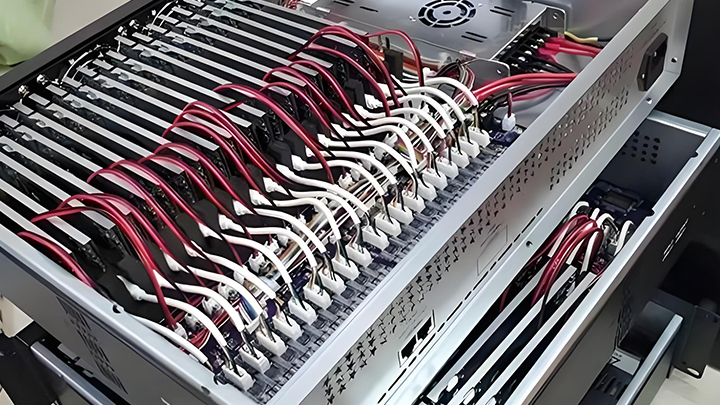
A conventional phone farm looks impressive in movies, but in reality it is a maintenance disaster. Imagine 100 smartphones, each with its own USB data cable and a separate charging cable. These cables weave together into a thick, unmanageable mess. If one cable fails, you must trace it through the jungle. If a phone’s battery begins to swell – a common problem – you might not notice until the battery pushes the screen out or, worse, catches fire.
Traditional racks also require constant airflow management. Fans must blow across the phones to prevent overheating, yet the cables block airflow. Many operators have returned to their farms to find melted USB ports, smoking batteries, or entire rows of dead devices.
The Battery Swelling and Overheating Epidemic
Lithium‑ion batteries are not designed to be kept at 100% charge under continuous load. In a traditional phone farm, devices are plugged in 24 hours a day, 7 days a week. The batteries undergo constant micro‑cycling, generating heat and producing gas. Over weeks, the gas causes the battery pouch to expand – “swelling”. A swollen battery can rupture, leak electrolyte, or ignite. This risk is so severe that some data centers have banned traditional phone farms entirely.
Group control devices like the Phone Farm Box eliminate the root cause: they remove the reliance on phone batteries. By powering the phones through a direct charging circuit (or using battery‑eliminator boards), the box keeps devices running without ever stressing the lithium cell. The phones operate as if they were on a constant external power supply, with no swelling and minimal heat generation.
Cable Clutter and Signal Degradation
Long USB cables are not just ugly – they are unreliable. Data signals degrade over distance, leading to disconnections and failed automation scripts. Traditional farms often need active repeaters or expensive high‑quality cables to keep 50+ phones online. The Phone Farm Box solves this by integrating the control electronics into a single enclosure. The distance between the host controller and each phone is measured in centimeters, not meters, ensuring rock‑solid communication.
What Makes a Group Control Device Different?
A true group control device (like the Phone Farm Box) has three defining features:
- Centralized power and data – One connection to the computer controls all devices inside the box.
- Battery management – Either bypasses batteries or uses industrial‑grade power delivery that does not degrade cells.
- Physical optimization – Devices are arranged for maximum cooling and minimum footprint, often with built‑in fans and temperature sensors.
The Bottom Line
Traditional phone farms are not just inefficient – they are dangerous. The fire risk from swollen batteries and the productivity loss from cable failures make them a poor choice for any serious operation. The Phone Farm Box represents a complete paradigm shift: safer, cleaner, more reliable, and scalable from 20 to 2,000 phones. For anyone still using a metal rack and a tangle of USB cords, the message is clear: it is time to upgrade.